
What Are The Latest Yoga Trends
Keep a serious weekly timetable, then add niches, seasonal challenges and ticketed events. Broga and bride yoga are not the 2026 story.
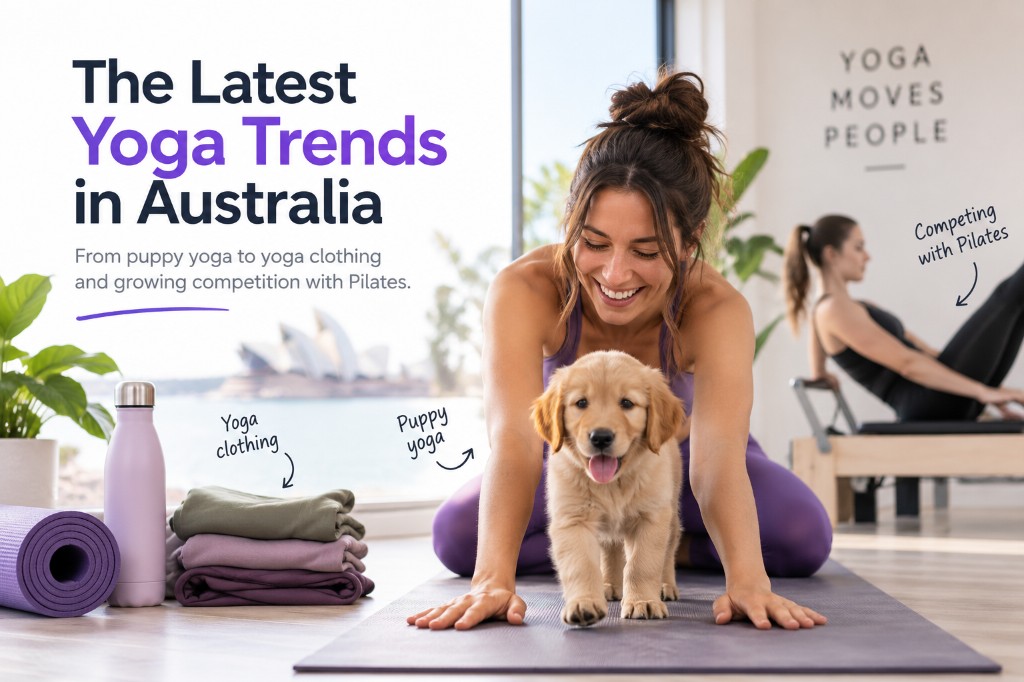
The latest yoga trends in Australia are not Broga, bride yoga or slackline. Those names belonged to an older roundup of novelty classes. In 2026, studios are competing with Pilates, filling moderately occupied rooms, and deciding what belongs on the weekly timetable versus what belongs in a ticketed event.
Fortune Business Insights values the global yoga market at US$63.82 billion in 2025, rising to US$68.15 billion in 2026 and US$119.69 billion by 2034, a 7.29% compound annual growth rate. The market is still growing. The booking fight is with Pilates and strength gyms, not with whether goat yoga is a weekly class.
Yoga Australia's Yoga's Evolution and Australia's Response puts the last twenty years plainly. Classes got shorter, more physical and more commercial. Teacher trainings became a studio product. COVID burst the bubble. Teachers who remember queues in the 2000s now look at moderately full rooms, while Pilates has another surge.
The Australian response is credibility: registration, continuing education, and yoga returning to conversations about private health insurance as a clinical treatment. That does not mean a small studio should ignore what people actually book. Keep the weekly timetable serious, then add niches, seasonal challenges and the occasional sell-out event. If rooms are quiet, start with how to fill your yoga classes before you rewrite the class names.
Table of Contents
What changed in Australia
For years the Western studio model treated yoga as fitness with a spiritual aftertaste. Power classes, hot yoga rooms and 200-hour trainings multiplied. Yoga Australia's argument is that this cycle ran its course.
The public is confused, many teachers left or returned to other work, and livestreaming kept a niche for people who prefer to stay home. Teachers who still want a deeper path can start with how to become a yoga teacher in Australia.
That is why "latest trend" lists from 2022 now look dated. Broga, Roga, bride yoga and beer yoga were marketing names. They did not rebuild occupancy. The studios that are holding their ground in 2026 are doing two things at once:
- making the regular class feel safe, skilled and worth leaving home for
- using events, niches and challenges to bring new people through the door
Yoga Australia remains the peak body for teachers and yoga therapists in this country. Its four-level registration, recognition of prior learning and CPD pathways are part of the professional story, especially as insurers prepare parameters for yoga as a health treatment. Mention qualifications where they matter. Do not turn every class description into a membership pitch.
If you are still building the business around the timetable, start with how to make a yoga studio schedule and the practical business challenges for yoga teachers. A new owner should also read our guide to launching a yoga studio in Australia.
Mental wellness, somatics and breathwork
People are not only coming to get flexible. They are coming to regulate. Anxiety, burnout and screen fatigue show up in almost every studio conversation. Slow cueing, optional variations, longer rests and trauma-aware language make a general class feel safer for stressed or returning students.
ClassPass's 2025 Look Back (bookings from 1 January to 10 October 2025) recorded meditation appointments up 50% even after meditation dropped out of the wellness top 10. Neighbouring wellness bookings tell the same story from a different room: sports recovery was up 155% and stretching appointments up 143%. Those are not yoga class numbers, but they are why rest, breath and Nidra now earn a place on the timetable.
Breathwork is also standing on its own. Some studios now run 20 to 30 minute pranayama or breath-focused sessions as workshops, corporate yoga offerings or digital extras. Somatic and trauma-informed work needs training and consent. Do not drop intense breath practices into a regular vinyasa class without saying so in the class description.
Yoga can support mental wellbeing. It is not a mental health treatment. Keep the language honest, and leave diagnosis and therapy to people qualified to do that work. Short home practices still help some students; see our notes on meditation apps if you recommend something they can use between classes.
Restorative, yin, Yoga Nidra and chair yoga
Power and hot yoga have not disappeared, but they are no longer the growth story. Restorative, yin and Yoga Nidra are the classes many students now ask for. They sit next to the wider interest in sleep, recovery and nervous system rest.
Our guide to yoga for insomnia is still the practical companion for bedtime and Yoga Nidra programming. Teachers looking at a structured Yoga Nidra pathway can also look at iRest courses in Australia. iRest is one protocol, not the only way to teach Nidra.
Chair yoga is the seniors format that actually works in community halls, libraries, retirement villages and quiet weekday slots. It supports balance, joint comfort and fall-prevention conversations without asking older students to get up and down from the floor. If your studio is talking to GPs or watching the health-fund discussion, chair yoga is easier to explain than a branded "goodnight yoga" class.
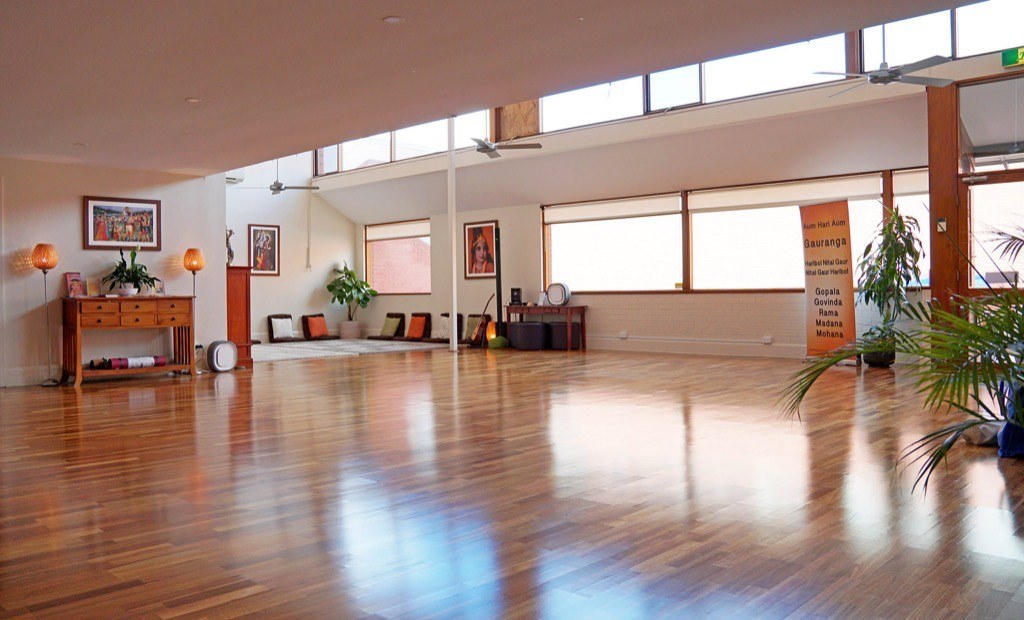
A small timetable does not need every slow style. Pick one rest class you can staff well, put it at a time older or burnt-out students can attend, and keep it on the calendar long enough to build a habit.
Niches that book every week
Inclusive programming beats novelty naming. The niches that belong on a weekly timetable in 2026 are groups of people with a reason to return, not a one-off theme.
Kids yoga
Kids yoga is a timetable product, not a cute extra. After-school classes, holiday workshops and family sessions bring parents into the building and can feed adult memberships later. Keep ratios, age groups and a clear client agreement in place. A 5-year-old class is not the same as a 12-year-old class. House rules also matter: see tips for safe yoga studios.
Pregnancy and prenatal yoga
Prenatal yoga still books when a trained teacher holds it. Pregnant students need modifications, rest options and a teacher who knows what to avoid. Do not fold pregnancy into a general class and hope for the best.
ClassPass's nearest related number is postnatal, not prenatal: postnatal workouts were up 77% year on year in 2025, with baby-and-me classes at the top of that category. That is a useful adjacent demand signal, not proof that prenatal is exploding on the same chart.
Our prenatal yoga guide covers the class-level dos and don'ts. Ask for extra training, a clear waiver and a pathway into postnatal or baby-and-me only if you can staff it.
Menopause yoga
Menopause yoga is a growing weekday request: cooling breath, bone-loading, sleep and joint care. It works as a named class or as a quieter morning slot with the same principles baked in. Staff it with a teacher who can talk about heat, sleep and bone health without turning the room into a medical lecture.
Men's mobility
Men's classes work better when you talk about mobility, lifting recovery and stiffness, not "Broga".
Fortune Business Insights still expects women to hold about 69% of the market in 2026, but says the male segment is growing fastest. It cites Yogkulam figures that U.S. male participation rose from 4 million in 2012 to 14 million in 2022. Grand View Research separately forecasts male yoga spend growing at 9.6% a year from 2026 to 2033.
Those are U.S. and global market figures, not Australian studio census data. Use them as a reason to welcome men, not as a promise that a "men only" slot will fill itself.
Adaptive classes
Adaptive and accessible classes signal that bodies with chronic conditions or limited mobility are welcome. If NDIS-funded group work is part of your model, read our notes on NDIS and group yoga in Australia.
Choose one niche you can teach well rather than adding five empty specialty slots. Students also still need a simple way to match style to body and goal, which is why which yoga is best for you remains a useful page to share with beginners.
Competing with Pilates and strength
ClassPass's 2025 Look Back put Pilates first globally for a third year. Pilates reservations were up 66% year on year. Yoga was second, up 28%.
Reformer was the leading Pilates format (+71%), with mat Pilates the fastest of the three (+114%). ClassPass also recorded more than 15 million Pilates reservations and 27 million searches for "Pilates" in that period. Canberra was the city most likely to book a Reformer Pilates class on the platform, so this is not only a U.S. story.
HYROX is the other booking competitor. ClassPass searches for HYROX classes jumped 506% globally in 2025, and reservations were up 432%. That does not mean every yoga studio should buy machines or run a race. It does mean some of your students will compare you with a Pilates studio or a strength gym down the road.
Useful responses that stay inside yoga:
- strength and mobility classes that help lifters, runners and HYROX-curious students recover and move well
- slow, stable asana with joint-friendly strength rather than endless vinyasa
- mat Pilates or yogalates only if a teacher is actually trained for it
Our comparison of Pilates vs yoga and the guide to teaching Pilates at a yoga studio cover the operational difference. If you do add Pilates, start with which Pilates class type fits before you buy machines.
Reformer is a capital decision; see our notes on reformer machines only if that is the business you are actually running. Strength-based yoga is a programming decision.
Hybrid memberships
COVID Zoom is not the 2026 digital trend. Students expect the studio they pay for to travel with them: a missed class, a short morning practice, a recorded Yoga Nidra, a livestream when they cannot get across town. High-performing studios fold that access into membership rather than selling it as a leftover product.
Fortune still expects in-person courses to hold about 63% of the yoga market in 2026. Online is the faster-growing slice: Grand View Research forecasts online yoga courses at about 10% CAGR from 2026 to 2033. ClassPass also saw lunch-hour bookings between 11:00am and 1:00pm up 38% globally, which is useful if you add short digital or express classes for people who cannot leave the office.
You do not need a huge content library. A small set of 10 to 15 minute practices, one rest class and a clear booking app is enough for many independent studios.
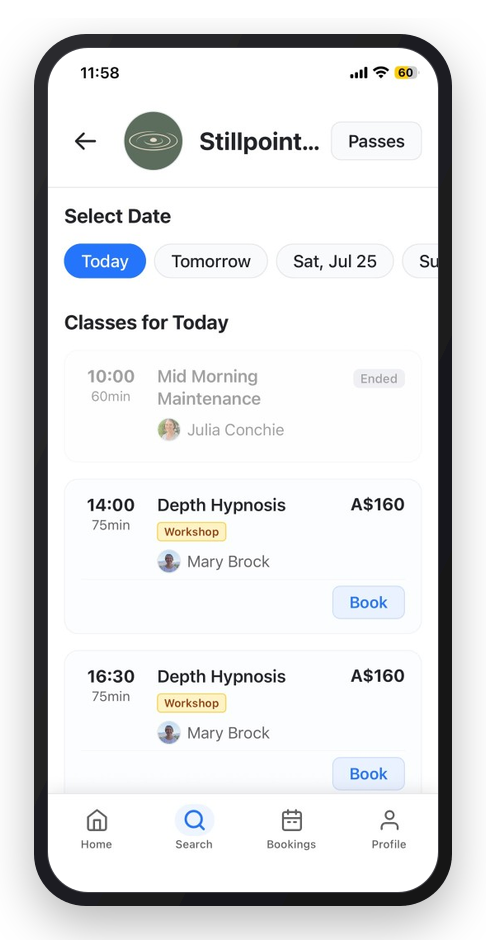
If you already stream, keep the ops simple: studios offering live-stream classes, Zoom vs YouTube, how to record classes and tips for teaching online.
Price extras with what to charge for an online class. A studio app should handle rolls, passes and on-demand access; students often want that on their phone, which is why a studio mobile app matters.
Spring and winter challenges
A 21- or 30-day challenge is not a new yoga style. It is a retention campaign with a start date, a simple rule and a reason to show up.
Winter suits restorative classes, Yoga Nidra and "come in from the cold" membership offers. Spring suits beginners, outdoor sessions, kids holiday workshops and a reset after winter.
ClassPass's 2025 "Great Lock In" window (1 September to 10 October) saw global fitness reservations rise 12%. That was a dated fitness-challenge campaign, not proof that a studio winter or spring challenge will fill by itself. It does show that people book more when there is a shared start date and a finish line.
What makes a challenge work:
- a dated enrolment so people start together
- a punch card, app streak or class pack that is easy to track
- one weekly email or studio newsletter, not a content dump
- a finish line: a community class, photo, small prize or membership discount
This is one of the better ways to increase class attendance and support client retention without inventing a new class name every month. A studio growth plan can schedule two challenges a year instead of constant discounting. Challenges also help a studio stand out locally without relying on gimmick class names.
Puppy, kitten, goat and horse yoga
Animal yoga is a live Australian booking trend. Treat it as an event, not as Monday's 6pm vinyasa.
Puppy and kitten yoga has moved from a novelty photo to a regular ticketed format. Operators such as Yoga Paws run sessions in several cities. Pawra Yoga in South Melbourne and Little Paws Yoga in Perth have made young-animal classes part of a wellness offer, often with shelter or socialisation partnerships.
Goat yoga still sells in Brisbane and Melbourne through organisers such as Karmably. Horse and equine-guided sessions sit in farm and therapy settings, including places such as Yoga Farm in Victoria.
These sessions fill because they are fun, social and easy to gift. First-timers who would not book a 75-minute ashtanga class will book a puppy class. That can be useful. It is not a substitute for a weekly spine of classes taught by people who know what they are doing.
If you host animals in your room, the non-negotiables are:
- rescue, shelter or ethical partners, not a revolving photo prop
- short animal time, water, rest and a handler who is not also teaching
- vet-grade cleaning between sessions
- insurance that actually covers animals on the floor; start with professional indemnity insurance for yoga and check the event with your broker
- a class description that says this is a gentle, beginner-friendly event
Sell them as workshops or corporate tickets. Keep them off the unlimited membership if they crowd out your regular students.
What students wear
Lululemon still sets the expensive studio look. Align-style pants sit well over US$100 a pair, and that uniform can make a new student feel they do not belong. Cheaper lines such as CRZ Yoga (Butterluxe and similar) are the widely discussed alternative: similar softness, much lower price, more variance in fit and durability.
Cost of living is part of the 2026 studio story. Tell new students that any comfortable, opaque clothing is fine.
If you sell retail, stock a mix rather than only premium labels, and use a studio POS that can take a mat or clothing sale without a second system. Students will still ask about gear; our guide to yoga mats is the practical companion. This is not a product review, and you do not need to become a clothing shop. You do need to stop implying that yoga requires a US$128 uniform.
What not to chase
Skip beer yoga, cannabis yoga, bride yoga and slackline if you were about to add them because an old blog post called them latest. They do not solve occupancy, and some of them create insurance and reputation problems.
Aerial yoga and stand-up paddle yoga can stay if you already have the rig, the beach or the teacher. They are local specialties, not a national 2026 trend you must install. Projection mapping, wearables and high-end sensory rooms belong to well-funded boutiques. A neighbourhood studio gets more from a clean room, a rest class, a kids slot and a working booking process.
Compare yoga studio management software in Australia when the bottleneck is rolls, waitlists, challenge packs or workshop tickets, not when you are hunting for the next class gimmick. Independent teachers comparing tools can also read our yoga software guide for Australian teachers.
Sources
- Fortune Business Insights, Yoga Market Size, Share and Industry Analysis, 2026-2034 (updated 4 May 2026): global market US$63.82 billion in 2025, US$68.15 billion in 2026, US$119.69 billion by 2034; 7.29% CAGR; offline share 62.54% in 2026; female share 68.57% in 2026; male U.S. participation cited via Yogkulam, 4 million in 2012 to 14 million in 2022.
- ClassPass 2025 Look Back Report (bookings 1 January to 10 October 2025): Pilates +66% and most booked workout for a third year; yoga +28%; Reformer Pilates +71%; mat Pilates +114%; more than 15 million Pilates reservations; Canberra the city most likely to book Reformer Pilates; HYROX searches +506% and reservations +432%; postnatal +77%; sports recovery +155% and stretching +143% are neighbouring wellness appointments, not yoga class bookings; meditation +50%; lunch-hour bookings +38%; Great Lock In (1 September to 10 October 2025) +12% global fitness reservations during a dated fitness-challenge campaign.
- Grand View Research, Yoga Market Size, Share and Trends: male segment CAGR 9.6% from 2026 to 2033; online yoga course CAGR about 10% from 2026 to 2033. Grand View uses a different total market size than Fortune; we use Fortune for the headline market figure and Grand View only for these segment growth rates.
- Yoga Australia, Yoga's Evolution and Australia's Response: Australian industry framing after the post-COVID shakeout, including private health insurance discussions.
Frequently asked questions
What are the latest yoga trends in Australia in 2026?
The weekly timetable is moving toward nervous system classes, Yoga Nidra, chair yoga, kids and prenatal niches, and some strength or mat Pilates. Studios also run winter and spring challenges, and some sell tickets to puppy, kitten, goat or horse yoga as events rather than as regular classes.
Is puppy yoga a real trend or a gimmick?
It is a real booking trend. Puppy and kitten yoga sessions sell out in several Australian cities. Treat them as workshops with animal welfare, hygiene and insurance in place, not as a replacement for your core weekly classes.
Should a yoga studio add Reformer Pilates?
ClassPass's 2025 Look Back put Pilates first globally for a third year (+66% reservations) and yoga second (+28%). Reformer was the leading Pilates format. Only add Reformer if you have the space, training and demand. A yoga studio can add mobility, strength-based yoga or mat Pilates without buying reformers.
Are short 5-minute yoga classes still a trend?
Short practices still help busy people stay consistent. They work best as digital extras, morning resets or challenge content, not as the only class on the timetable.
Do students need expensive yoga pants?
No. Lululemon still sets a premium look, but cheaper lines such as CRZ Yoga are widely worn. A studio should say that any comfortable, opaque clothing is fine so cost of living does not become a barrier.
Is goat yoga still a thing in Australia?
Yes, as an event. Goat yoga still runs in cities such as Brisbane and Melbourne, and equine-guided sessions sit in farm and therapy settings. They are community and ticketed experiences, not the weekly timetable.
The bottom line
For a small Australian studio in 2026, the useful playbook is simple:
- Keep one serious weekly spine: a beginner or all-levels class, one stronger class if you have the room, and one rest, Nidra or chair class.
- Add one niche you can staff, such as kids, prenatal or seniors.
- Run a winter or spring challenge with a start date and a finish line.
- If animal yoga fits your space and insurance, sell it as an event.
That mix takes Yoga Australia's point seriously. The practice needs depth and professional standards again. It also has to fill the room. Puppy yoga can sell tickets. Chair yoga can keep older students. Neither replaces a teacher who can hold a regular class well. For the business around that timetable, see tips to start a yoga business and our guide for new yoga teachers.