
How to Grow a Yoga or Pilates Studio
Attendance, revenue and income are three different numbers. Growth is the income left after the room is paid for.

Most owners who ask how to grow a yoga or Pilates studio want a fuller room. A fuller room helps. For the person paying the rent, growth is the income left after the room is paid for.
This is a practical 2026 guide for a studio that is already open. If you are still choosing a model, start with the checklist for launching a yoga studio in Australia. The notes below are general business information, not financial advice.
Table of Contents
What growth means
Three numbers tell you whether the studio is actually growing:
- Attendance is the people who show up. It tells you whether a class slot is worth keeping.
- Revenue is the money collected before costs: memberships, drop-ins, packs, workshops, teacher education and retail.
- Income is what remains after rent, teacher pay, insurance, software and marketing. That is the number this guide means by growth.
A busy room of free visits, heavy discounts or low ClassPass payouts can lift attendance while income falls. A second room can lift revenue and still leave little once rent and teacher pay are covered. Put your own rent, teacher pay and prices into the yoga studio revenue calculator. If reformers or mat classes share the space, use the pilates studio revenue calculator as well.
The order that holds up in owner conversations is plain. Fill and keep the classes you already run. Give people a reason to know each other. Add paid workshops for students and for teachers. Spend on ads, extra classes or a bigger room after the current timetable pays for itself.
Fill the timetable you already have
Owners on r/YogaTeachers describe the same pattern. A week of half-empty classes is often the same students spread across too many slots. Move or remove the quiet ones and the classes that remain feel full. Regulars carry a healthy week. Drop-ins top it up.
Pull attendance for each slot over the last two or three months. Duplicate a class that has a waitlist. Change the time, the teacher or the level of a class that stays quiet. The schedule guide shows how to build a timetable you can staff, and how to increase class attendance covers the follow-up once the week is tight.
On r/YogaStudioOwners, owners treat memberships as the money that covers overhead. Class packs and drop-ins sit on top of that. Price the membership so a regular who comes twice a week does better than a pile of casual visits, and so do you.
A loved community can still close. A 2019 r/yoga thread followed a long-running studio that people treasured and that still failed because the money was ignored. The business side of yoga is usually cash flow. Keep the attendance report and the bank balance in the same monthly review.
Build a student community
Students stay where they know a name and a face. Learn names. Greet people when they arrive. Stay for a few minutes after class. Introduce a new student to a regular who comes at the same time. Those minutes before class are some of the most useful in the week. The teacher who arrives early does this work. The receptionist guide covers when a person at the door starts to earn their wage.
A ritual can lift a quiet slot. I have seen a Friday morning class fill after the studio put a simple coffee club beside it. People came for the practice because they wanted the conversation afterwards. The coffee sat next to a paid class. The class fee stayed in place. A cafe table, a pot of coffee in the studio, or a short walk to the place next door is enough. Keep it on the same Friday, at the same time, so it becomes part of the week.
Other rituals that owners and teachers describe work the same way: a monthly bring-a-friend class at a normal intro rate, a seasonal gathering, or a shared challenge with a start date and a finish. Two challenges a year are plenty. Client retention and how to make a studio stand out go further on habit and local character.
Workshops for students
Workshops are for students who already come, and they are a separate product from the weekly class. Run them for 90 minutes to half a day. Useful topics include inversions, breath, prenatal work, anatomy, and reformer foundations if you teach Pilates. Price the workshop so the teacher and the room are covered, then add a margin. Offer them once the weekly classes pay for themselves. Money-making ideas for yoga studios lists more offers that sit beside the timetable.
A workshop also gives students something to do together. Partner work, a themed deep-dive or a solstice practice creates a shared afternoon that a normal Tuesday class does not. Students who come to workshops are often the ones who stay.
Keep a short free intro for someone who has never been in, and point them to a paid class the same week. If students ask for reformers or mat Pilates, read whether you can teach Pilates at a yoga studio before you buy equipment.
A community for teachers
Students return for teachers. The studio grows when those teachers stay. Give them a community of their own:
- A monthly meet with a written agenda. Teachers on r/YogaTeachers say a formal meeting should be paid. If the hour is unpaid, send the update by email and keep the in-person time for practice.
- Workshops teachers can use on the mat. Hands-on assists, cueing, sequencing and anatomy. Comp or deeply discount your teachers into workshops you already run. A small annual stipend for outside training helps when the numbers allow it. Teachers in the same thread ask for that continuing education, and for a chance to lead.
- A workshop or short course of their own. That is income for the teacher and a new offer for students.
- A simple cover plan. Agree how a sick day is filled, and make it normal for teachers to drop into each other's classes. A newcomer who walks into a room with a few familiar faces is more likely to book again.
- Mentoring for newer teachers. A short practice-teach in a friendly room, then notes afterwards. Teachers also build this outside one studio, in monthly cafe meetups and small discussion groups. You can host that.
Hire for manner and training. How to find a yoga teacher covers the search. Pay is part of retention. The Pilates Journal describes how recurring client revenue gives a studio room to raise teacher pay and keep career teachers through quiet months. If you employ teachers, superannuation is part of that cost.
Win the second visit
The first class is the easy part. The second visit is where people disappear. Teachers talking through the first 30 days say a warm first class, a question about what the student wants, and a specific next class do the work. A personal note the next day, with the timetable and that suggested class, catches people while the class is still fresh.
In a thread about getting people through the door, a free opening class brought friends of the teacher. The owner still had to market the room, send a regular email, and talk to local health practitioners. Another teacher said ClassPass filled the mats, and that most of those students were still ClassPass students. Count those visits as attendance. Compare the payout with a direct membership before you treat the room as growth. The 2026 yoga trends guide includes the ClassPass booking figures.
Booking, email and referrals
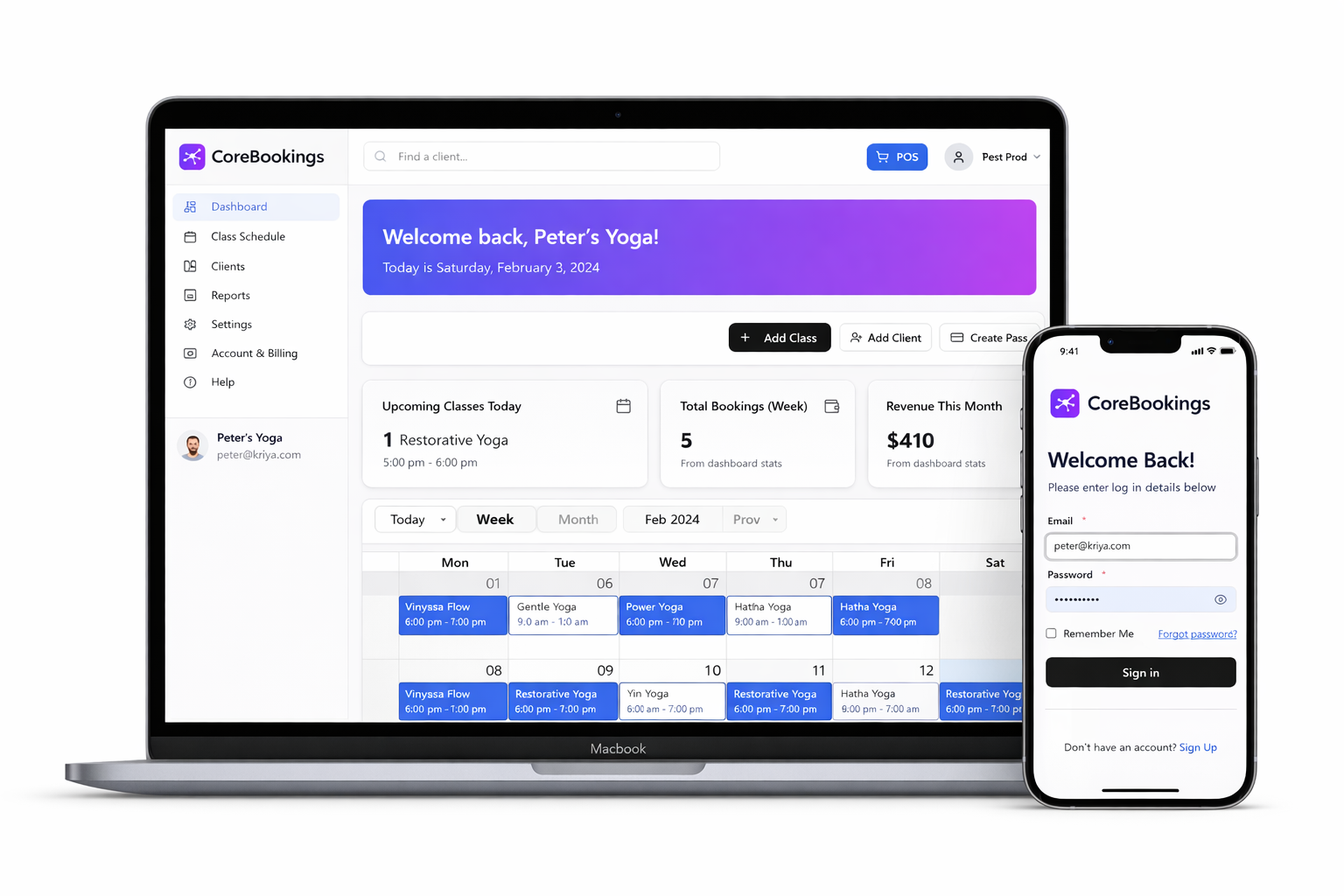
People should book and pay before they arrive. Online booking also gives you the email address, the attendance record and a way to see who has gone quiet. New teachers can start with the booking guide for new yoga teachers. Studios comparing tools can use the Australian studio software guide.
CoreBookings can take the booking, the pass and the payment once that work is ready to leave a spreadsheet. Compare current plans when the timetable and prices are written down.

Email the people who already came. A weekly note is enough: the classes this week, one workshop, one teacher. Collect addresses at booking. The email and newsletter guide covers what to send. Ask for a review after a class that went well. A line in that email and a small sign near the door are enough. Listing the studio on Google is the page new students find first.

Referrals work when both people receive something after the friend attends and pays. A class credit each, or a modest membership benefit, is enough. Word of mouth is still what owners on r/YogaStudioOwners credit for growth, ahead of social posting. The check-in and the minutes after class are where that recommendation starts.
Local partners and social posts

Talk to the cafe, the physio, the library and the allied-health clinic on your street. Offer their clients a clear intro, and leave a card they are willing to keep on the counter. A business at a similar stage will usually share a post and a conversation. The cafe that hosts Friday coffee is often the first of these.
Social media supports that local work. Post the timetable, a teacher's face and the Friday coffee club. Once a week is a sustainable pace. Hootsuite's 2026 demographics, drawing on Statista, put 25 to 34 year olds as Instagram's largest group at 33.3 percent, and 18 to 34 year olds at about 63 percent of users. That is a reason to be on Instagram when your students are in that range. Facebook still reaches local students in their 30s, 40s and older, which is often the Friday morning room.
A clear, quiet playlist helps the room feel settled. If you play recorded music, check OneMusic Australia, and use a portable sound system the teacher can actually run.
When to add a class, a room or ads
Add a class when one slot has a waitlist for several weeks and the class already covers its costs. Add a workshop series when regulars ask for depth and the weekly timetable is paying for the room. Add a second room, a reformer or an ad budget when the calculator says the current room can carry a quiet month.
Review attendance and income together each month. When one rises and the other falls, change the offer, the discount or the timetable before you buy more capacity.
Related tools and guides
- Yoga studio revenue calculator
- Pilates studio revenue calculator
- How to make a yoga studio schedule
- How to increase class attendance
- Client retention
- Email marketing for yoga studios
- Money-making ideas for yoga studios
- Launch a yoga studio in Australia
- 12 tips to start a yoga business
Sources
- r/YogaTeachers, Studio owners: how do you keep classes full? Half-empty weeks are often the same students spread across too many slots. Regulars fill the room. Teacher connection brings people back.
- r/YogaStudioOwners, About to take the leap and open my own studio Word of mouth and the minutes around class. Memberships cover overhead. Packs sit on top.
- r/YogaTeachers, How to get people in the door of a new studio A free class brought friends. Owners still needed email, local health referrals, and a clear offer. ClassPass filled mats that stayed on ClassPass.
- r/YogaTeachers, 30-day member onboarding The second visit is the hard one. A personal note and a suggested next class matter in the first month.
- r/YogaTeachers, What do you want from your studio owners? Paid meetings, complimentary continuing education, a training stipend, and a chance to lead a workshop.
- r/yoga, 2019, Need advice from yoga studio owners A loved studio can still close when the money is ignored.
- The Pilates Journal, Unlocking recurring revenue and teacher pay Recurring client revenue is what lets a studio raise teacher pay and keep career teachers.
- Hootsuite, Instagram demographics marketers need in 2026 Drawing on Statista: 25 to 34 year olds are 33.3 percent of users, and 18 to 34 year olds are about 63 percent.
- OneMusic Australia for playing recorded music in a studio.
Frequently asked questions
Does growing a studio mean more students, more revenue, or more income?
Income. Attendance is who shows up. Revenue is what you collect before costs. Income is what remains after rent, teacher pay, insurance, software and marketing. A studio can add students or revenue and still take home less. Watch all three, and treat income as the result.
Can a Friday coffee club increase class attendance?
Yes. A regular coffee beside a Friday morning class gives people a social reason to come. Keep the class paid. Hold the coffee at the same time each week so it becomes a habit.
Should workshops be free?
Charge for student workshops of 90 minutes to half a day, and price them so the teacher and the room are covered. A short free intro is for someone who has never visited. Comp your own teachers into workshops, and run separate teacher sessions on assists, cueing and sequencing.
How do I keep teachers?
Pay them fairly, including superannuation when you employ them. Hold meetings that are paid and have an agenda. Offer continuing education, a way to lead a workshop, and a simple cover plan when someone is away. Students come back for teachers who stay.
When should I add more classes?
Add a class when one slot has a waitlist and already covers its costs. Move or remove a quiet class before you open a new one. Use the revenue calculator before you add a room or equipment.
The bottom line
Growth is fuller classes of people who pay, plus a few offers they are glad to buy. A Friday coffee beside the morning class. Workshops for students. A teacher community that keeps good teachers in the room.
Fill the timetable you have. Watch attendance, revenue and income in the same review. Add the next class, the next room or the next ad only when the current one already pays.
When you want bookings and payments in one place, start with CoreBookings for new yoga studios or book a demo.