
Which Type of Pilates Class is Best for You?
Pick by goal and format, not by the name on the timetable. Mat is not a required first step, and reformer is not automatically advanced.
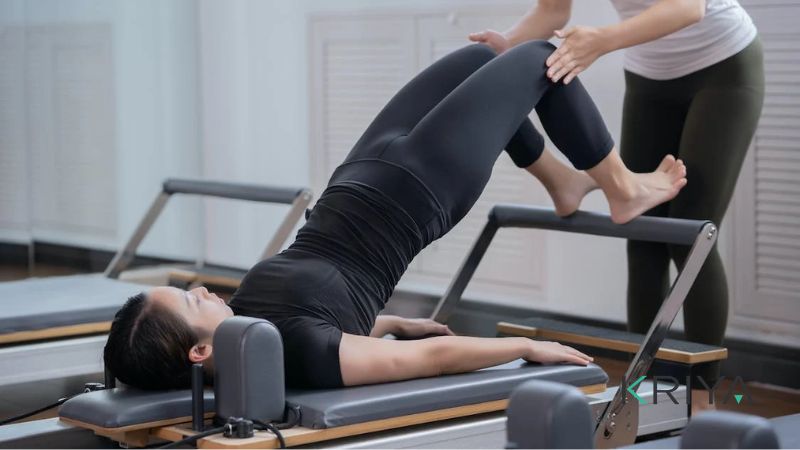
The best Pilates class is the one that matches your goal, your body and the way the room is actually taught. The name on the timetable is not enough. Mat, reformer, studio and clinical sessions can all be called Pilates and still feel like different sports.
Joseph Pilates, born in Germany, developed the method he called Contrology while interned in Britain during the First World War. He later opened a New York studio with Clara Pilates in 1926. Encyclopaedia Britannica and the Pilates Foundation both tell that longer story. The work did not start as a New York fitness fad.
If you are still choosing between the two rooms, start with Pilates vs yoga. If you already know you want Pilates, use the map below. ClassPass's 2025 Look Back put Pilates first globally for a third year, with reformer the leading format and mat growing fastest. That demand is why Australian timetables now mix rehab, boutique reformer and heated mat under one word.
Table of Contents
How Pilates is classified
Studios mix three different labels on one class card. Separate them before you book.
- Lineage: classical work follows Joseph's original order and cues. Contemporary schools such as Stott, BASI and Polestar add modern anatomy and physiotherapy ideas.
- Equipment: mat, reformer, or a full studio with Cadillac, chair and barrels.
- Setting: large group, small group, semi-private, private, or clinical.
A contemporary reformer class of eight people is not the same product as a classical studio hour on mixed apparatus, and neither is the same as physio-led clinical work. Teachers still come back to the same six principles: concentration, control, centre, flow, precision and breathing. The difference is how those principles are taught, and on what.
This page was checked in September 2026. Prices move by suburb and intro offer. Confirm the class description, the teacher and the ratio before you pay for a pack.
Mat Pilates
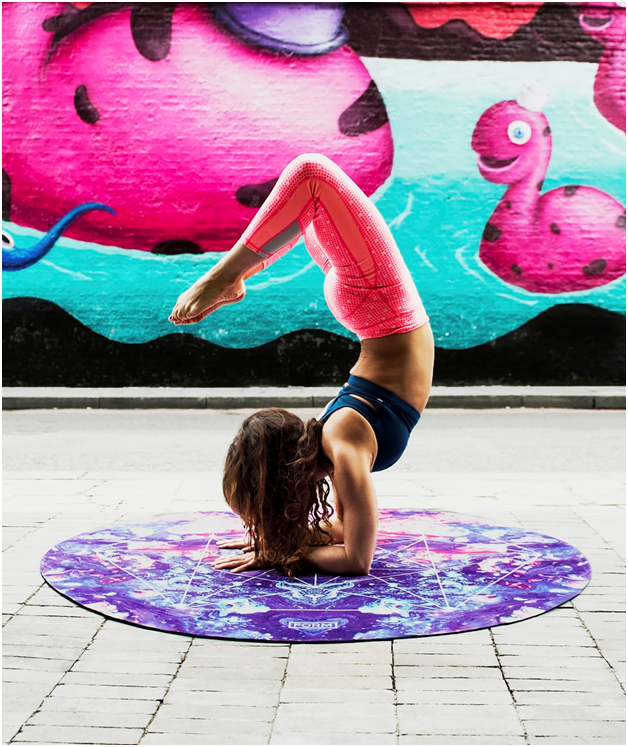
Mat work is bodyweight Pilates on the floor. You need a mat, and you may see a magic circle, band or ball. Joseph published a mat sequence in Return to Life Through Contrology in 1945. That is one reason mat still feels like the original homework of the method.
It is popular because it is cheap to run and easy to find in gyms, parks and yoga rooms. It is not a rule that everyone must start here. A crowded gym mat class can be harder to follow than a quiet beginner reformer. If you want yoga instead, which yoga is best for you is the matching page.
Book mat if you want a lower casual rate, travel-friendly homework, or a class you can keep doing when you do not have a machine. Teachers who already run yoga can add mat more easily than reformer. See teaching Pilates at a yoga studio before you rewrite the timetable.
Reformer Pilates
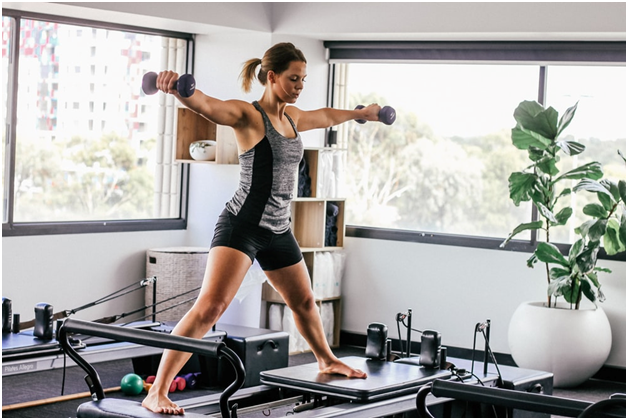
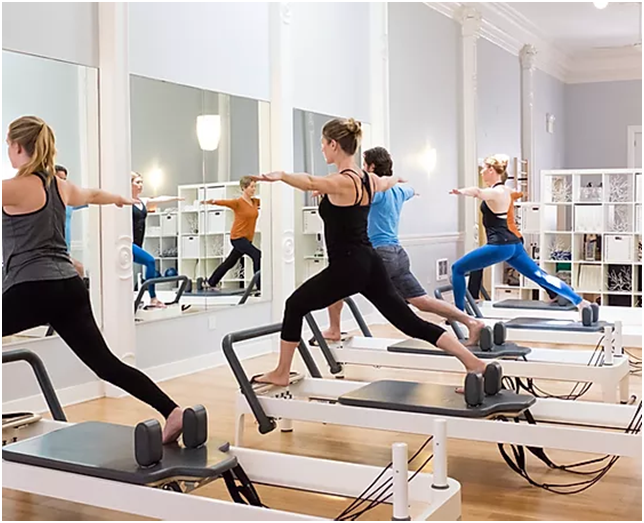
The reformer is a sliding carriage, springs, straps and a footbar. Many of the same shapes you know from the mat happen here with spring load. Springs can assist a movement or resist it. That is why beginners can start on the reformer, and why the old line that reformer is “more advanced than Pilates” is wrong.
Group reformer in Australia is usually 4 to 12 people, not a 50-person gym floor. Older studio slang still calls some of these Allegro classes, after a Balanced Body reformer model. The useful question is the ratio and whether the teacher can see your springs, not the brand name on the rail.
If you are buying machines rather than booking a class, start with the 9 best Pilates reformers. Reformer rooms also need a booking system that respects capacity and waitlists. That is the job of Pilates studio booking software, not a paper form at the door.
Studio and comprehensive classes
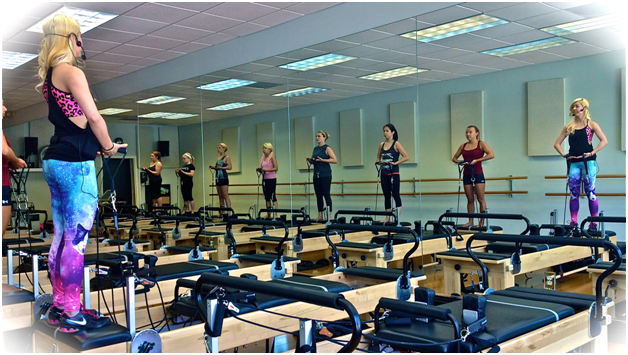
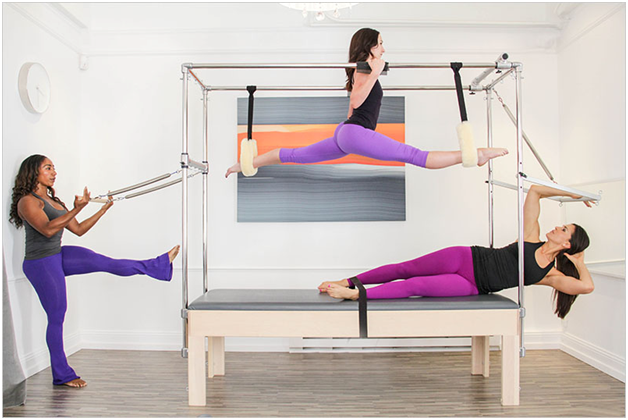
Studio, or comprehensive, Pilates uses the full kit: reformer, trapeze table (Cadillac), Wunda chair, spine corrector and barrels. Classes are usually private or a small group of two to four. The teacher writes or adjusts the session for the people in the room, instead of running one choreographed track for twelve carriages.
This is the format people mean when they say the work is individually focused. It is not the same thing as “contemporary Pilates.” Contemporary is a teaching lineage. Studio is a room and a ratio. You can have a contemporary studio class or a classical one.
Expect a higher casual rate. You are paying for equipment, space and attention. Owners naming a comprehensive room can look at Pilates studio name ideas so the brand sounds like apparatus work, not a yoga sanctuary.
Clinical and physio Pilates
Clinical Pilates in Australia is usually assessment-led work for pain, injury or post-surgery rehab. A physiotherapist or similarly trained clinician watches how you move, then writes a program. Sessions may use mat, reformer, Cadillac or chair. The point is a diagnosis and a plan, not a sweaty group playlist.
It sits near contemporary teaching because it borrows modern physio ideas. It is not just a quieter reformer class. Private health extras, if they apply at all, typically require a registered physio. Fitness instructors should not promise rebateable clinical work. For the clinic side of booking and notes, see physio Pilates software.
Research supports Pilates as one useful option for some neck and back pain, not as a cure-all. A 2018 trial in the Journal of Bodywork and Movement Therapies found selective Pilates helped chronic non-specific low back pain. A separate 2018 Archives of Physical Medicine and Rehabilitation trial found mat-and-equipment Pilates improved chronic mechanical neck pain compared with medication alone. A 2023 review of randomised trials reached a similar conclusion for chronic low back pain. That is not the same as one paper proving “classical Pilates fixes neck and back.”
Classical vs contemporary
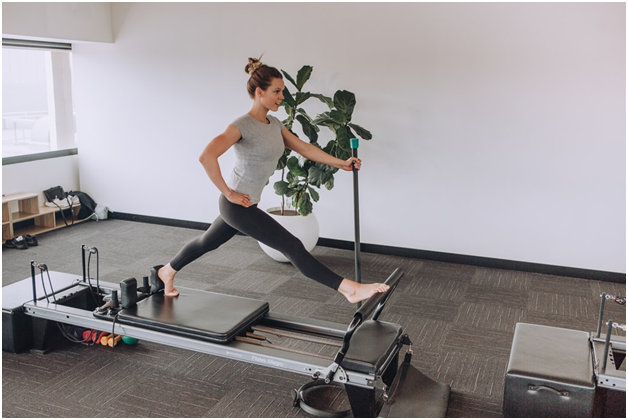
Classical studios stay close to Joseph's original order, spring settings and teaching language. You will hear the same sequence week to week. The aim is to learn the system, not to invent a new workout every Monday.
Contemporary schools keep the principles and change the choreography. Stott, founded by Moira and Lindsay Merrithew, talks about supporting the spine's natural curves. BASI, Polestar and similar programs fold in current biomechanics. Teachers may modify on the spot. That flexibility is useful. It is also why two “contemporary” classes can feel unrelated.
Neither lineage is automatically better for weight loss or rehab. Classical is not only mat-plus-equipment. Contemporary is not only a four-person studio. Ask which school the teacher trained in, then watch a class.
Other formats you will see
Group, semi-private and private
Group classes share one sequence. Mat groups in a gym can be large. Reformer groups should stay small enough that the teacher can change springs. Semi-private is usually two to four people. Private is one to one. Calling a class of six “private” is marketing.
Group is cheaper and more social. Private costs more and is the right buy when you have pain, a sport-specific goal or you get lost in a pack.
Hot, prenatal, jumpboard and online
Heated mat, often branded hot Pilates, is a fitness class in a warm room. It is not classical work. Prenatal and postnatal classes need a teacher who can modify. Jumpboard or cardio reformer adds a board to the carriage for plyometric work and a higher heart rate.
Online and on-demand mat still help when you cannot get to the studio. Live reformer from home only works if you already own a machine and the teacher can see your setup. How to use Zoom for Pilates classes covers the practical side.
Megaformer, barre and other fusions
Lagree and Megaformer classes are high-intensity strength on a longer, heavier cousin of the reformer. They are not classical Pilates. Book them for load and sweat. Do not treat them as clinical rehab.
Barre brands such as Booty Barre and Xtend mix ballet-barre work with Pilates-style core. Yogalates blends yoga and Pilates. BODYBALANCE is a Les Mills class that layers tai chi, yoga and Pilates to music. These can be good workouts. They are fusions. If you want the original method, read the class description for repertoire, springs and teacher training, not a brand mash-up.
Yoga rooms still feel this crossover in the latest yoga trends. A teacher considering both careers can also read what yoga and Pilates teachers in Australia actually do.
Studio equipment and props
The main classical pieces are the reformer, trapeze table (Cadillac), chair, spine corrector and ladder barrel. You may also see a baby arc, Ped-o-Pul, wall unit or a reformer-Cadillac combo. Rael Isacowitz's Avalon system is a later specialised set, not a required studio purchase.
Joseph designed apparatus so people could learn movements they could not yet do on the mat. Most pieces use springs. Changing the spring changes which muscles work and whether the machine helps or fights you. That is coaching, not a difficulty badge.
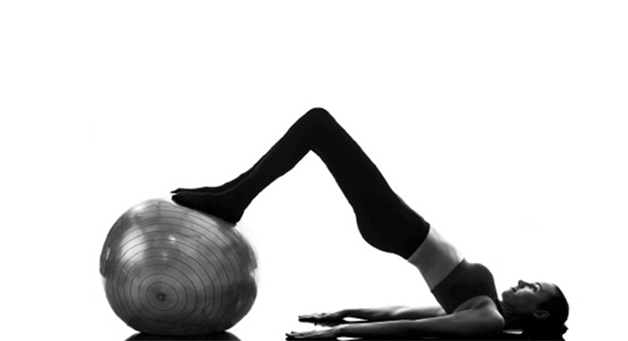
Small props (magic circle, foam roller, Swiss ball, Chi ball, Theraband, Franklin ball) add resistance, instability or self-massage. They are cheap enough for home use. Our notes on props people actually use overlap with what a mat class brings out of the cupboard.
What Pilates costs in Australia
These are typical 2026 Australian casual ranges, not a national price list. Inner-city boutique rooms sit at the top. Suburban and intro packs sit lower.
- Mat group: about $20 to $40 a class. Private mat is often $80 to $130.
- Reformer group: about $30 to $45 is common. Some CBD rooms charge more. Private reformer is often $90 to $150.
- Clinical or comprehensive studio: group or duo work can land around $40 to $80 a person. One-to-one clinical is often $90 to $150 or more after an initial consult.
- Fusion classes (barre, hot mat, Megaformer): often $20 to $50, depending on heat, machines and postcode.
Packs and weekly memberships cut the casual rate. A 10-class pack or an unlimited month is how regulars keep the habit. Location, ratio and the teacher's qualifications move price more than the word contemporary on the flyer.
Studio owners can model packs and occupancy with the Pilates studio revenue calculator before they lock in intro pricing.
Which type is best for you?
Match the format to the job. Then meet the teacher.
- New to Pilates, no injury: a labelled beginner mat or beginner reformer. Pick the room you will actually return to.
- Back or neck pain, post-op, or a long injury history: clinical or physio Pilates first. Get medical advice. Do not use a packed group class as treatment.
- Pregnancy: a prenatal class with a trained teacher. Tell them how many weeks you are.
- Strength, posture and a weekly habit: group reformer or a well-taught mat class, two or three times a week.
- Sweat and high load: jumpboard, hot mat or Megaformer, if your joints tolerate it.
- Athletes and detailed technique: studio, semi-private or private, so the teacher can change springs and apparatus.
Pilates can tone muscle, help some people manage back pain, and sharpen how you move. It is one part of a fitness week, not a whole health plan. Instructors add their own flavour. Watch one class, then buy the pack.
Sources
- Encyclopaedia Britannica, Joseph Pilates: German-born founder of Contrology, interned in Britain in the First World War, opened the New York studio with Clara Pilates in 1926.
- Pilates Foundation, Joseph Pilates: method history and the Contrology name.
- ClassPass 2025 Look Back Report (bookings 1 January to 10 October 2025): Pilates most booked workout for a third year, reservations up 66%; reformer the leading format, up 71%; mat the fastest of the three, up 114%.
- Hasanpour-Dehkordi, Javadi and Solati, Journal of Bodywork and Movement Therapies, 2018: six weeks of selective Pilates improved pain, flexion range and disability in chronic non-specific low back pain compared with extension-based exercise.
- de Araujo Cazotti et al., Archives of Physical Medicine and Rehabilitation, 2018: 12 weeks of mat-and-equipment Pilates improved chronic mechanical neck pain, function and quality of life versus medication alone.
- Patti et al., systematic review, 2023: Pilates training reduced pain and disability in chronic low back pain across randomised trials, with some benefit still visible at six months.
- Les Mills, BODYBALANCE: choreographed fusion of tai chi, yoga and Pilates.
Frequently asked questions
Do I have to start with mat Pilates?
No. Mat is a common first class because it is cheaper and easy to find, but it is not a required first step. Many Australian beginners start on the reformer. Springs can make a movement easier as well as harder. Book a beginner class in the format you actually want to keep doing.
Is reformer Pilates more advanced than mat?
Not automatically. The reformer is a tool. A well-taught beginner reformer class can be gentler than a fast gym mat class. Joseph Pilates designed apparatus to help people who could not do the work on the floor. Difficulty depends on the springs, the sequence and the teacher, not the machine name.
What is the difference between clinical Pilates and a regular reformer class?
A regular group reformer class uses a shared sequence. Clinical or physio Pilates starts with an assessment and a program written for your injury, pain or post-op needs. In Australia that work is often led by a physiotherapist. Private health extras usually only apply when a registered physio delivers the session.
How much does a Pilates class cost in Australia in 2026?
Casual mat classes often sit around $20 to $40. Group reformer is commonly $30 to $45, with boutique inner-city rooms a little higher. Private or clinical sessions are often $90 to $150 or more. Intro packs and memberships cut the per-class price. Suburb, ratio and teacher training move the number more than the word Pilates on the timetable.
Is Megaformer or Lagree the same as Pilates?
No. Lagree and similar Megaformer classes are high-intensity strength workouts on a related machine. They borrow some shapes and spring resistance. They are not classical Pilates and they are not a rehab class. Book them if you want sweat and load. Book clinical or studio Pilates if you want assessment, control and a slower progression.
The bottom line
Do not start from a marketing name. Start from the job: rehab, a first habit, strength, or sweat. Then choose mat, reformer, studio or clinical, and check the ratio.
You do not have to earn the reformer by surviving mat. Reformer is not automatically advanced. Clinical work is not a quieter group class. Megaformer is not classical Pilates.
If you run the studio, the same map helps you write class descriptions people can trust. Capacity, packs and waitlists belong in CoreBookings for Pilates studios. The class type still has to be true on the timetable.